The Complete Guide to Copper Gutters: Cost, Lifespan, and Why Edmond Homeowners Are Making the Switch
If you have ever searched for "copper gutter installers near me," you already know the results can be overwhelming. Some contractors treat copper as an afterthought, while others position it as the only material worth considering. The truth sits somewhere in between, and by the end of this guide, you will know exactly what copper gutters cost, how long they actually last, and whether they are the right investment for your Edmond home. This is not a surface-level overview. It is a practical resource built for homeowners who want to understand the material before they start making calls.
What Are Copper Gutters?
Copper gutters are a seamless or sectional gutter system fabricated from 16- or 20-ounce copper sheeting. The gauge refers to the weight per square foot: 16-ounce copper is the standard for residential installations, while 20-ounce copper offers additional rigidity and is sometimes specified for commercial or high-wind applications.
What separates copper from standard aluminum or vinyl is its relationship with time. Aluminum gutters are painted and eventually fade, chalk, or dent. Vinyl gutters become brittle under UV exposure and crack during freeze-thaw cycles. Copper does none of these things. It does not rust because it contains no iron. It does not warp under heat. It does not need paint, and it never requires scraping or refinishing. The material forms its own protective layer through oxidation, a process that actually strengthens its resistance to the elements over decades.
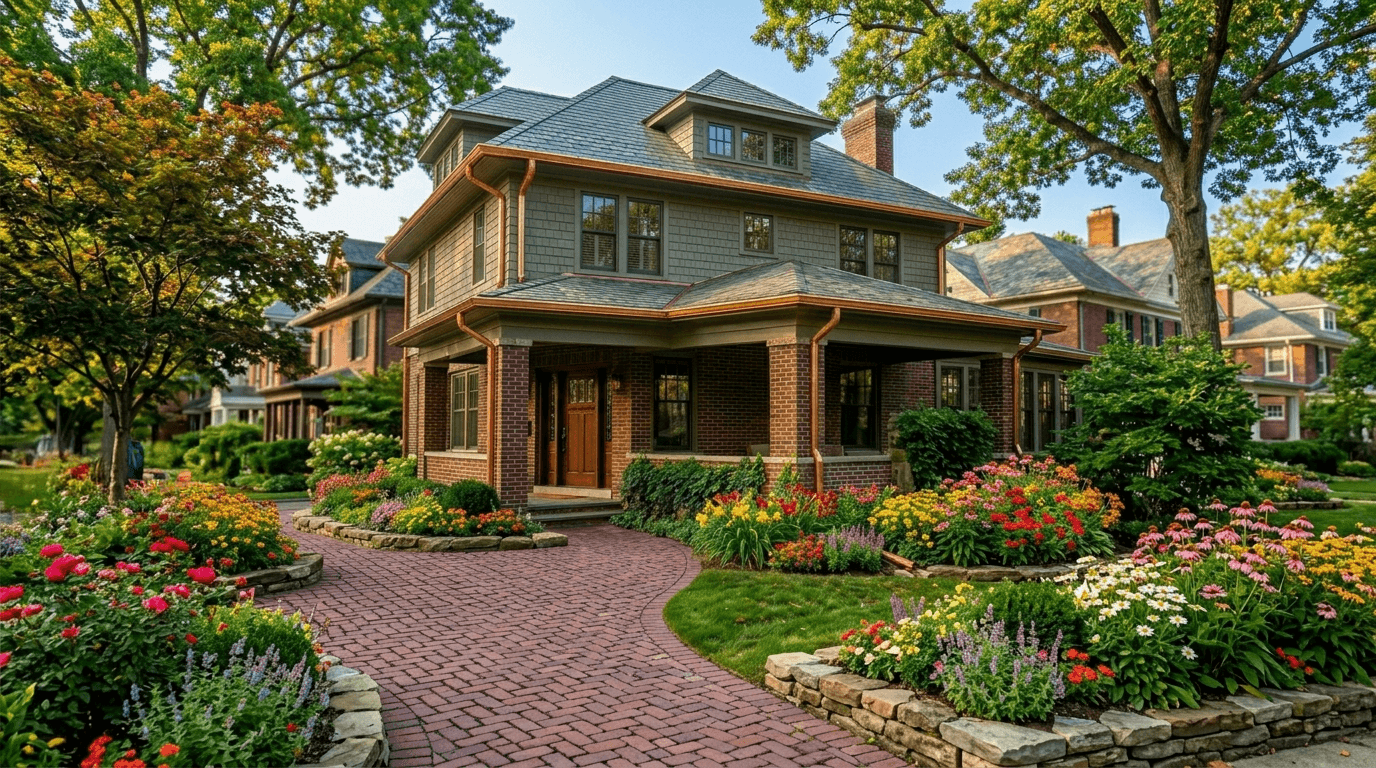
Copper gutters come in two primary profiles. K-style copper gutters have a flat back and a decorative front that mimics crown molding, making them a popular choice for traditional suburban homes. Half-round copper gutters are shaped like a semi-circle and are commonly found on historic properties, custom builds, and homes with architectural styles dating before 1950. Both profiles are available in 5-inch and 6-inch widths, with 6-inch half-round being the recommended standard for handling Oklahoma's heavy spring downpours.
One critical fact that sets copper apart from every other metal gutter on the market: copper is the only material that resists underside corrosion. Steel gutters rust from the inside out. Aluminum eventually pits and weakens at the seams. Copper develops its patina uniformly, inside and out, which means the gutter system maintains structural integrity for decades longer than any alternative. This is not a product you install with the expectation of replacing it in 15 years. It is a permanent building component, and that distinction matters when you consider who should be installing it. Copper gutter work requires specialized soldering, expansion joint placement, and material handling skills that general roofing crews rarely possess.
Why Choose Copper Gutters?
Unmatched Longevity
The lifespan numbers for copper gutters are not marketing exaggerations. Multiple industry sources cite a minimum service life of 50 years, and contractors who specialize exclusively in copper installations, such as Keenridge Construction, routinely state that properly installed half-round copper gutters can last 100 years or more. That is not a typo. A copper gutter system installed on a new home in 2026 could still be performing its job in 2126.
What makes this possible is the material's inherent corrosion resistance combined with the absence of failure points that plague other systems. Aluminum gutters rely on factory-applied finishes that degrade. Vinyl gutters depend on UV stabilizers that eventually deplete. Copper needs no chemical additives or protective coatings to achieve its lifespan. The metal itself is the protection.
For Edmond homeowners, this longevity translates into a generational investment. You are not budgeting for a gutter replacement in 20 years. You are installing a system that will likely outlast your mortgage, your roof, and possibly your ownership of the home entirely. When you factor in the avoided cost of two or three aluminum replacements over the same period, the math starts to shift in copper's favor.

Photo by Francesco Ungaro on Pexels
The Patina Aesthetic
Copper gutters do not stay copper-colored forever, and that is exactly the point. The material undergoes a predictable, beautiful aging process that adds character to a home rather than detracting from it. Freshly installed copper has a bright, penny-like shine that catches the light. Within the first year, it begins to darken to a warm bronze or umber tone. Over the next several years, the surface develops a green patina, the same protective layer that has preserved copper roofs and statues for centuries.
This patina is not a defect or a sign of deterioration. It is copper's natural response to oxygen, moisture, and trace atmospheric compounds. The green layer actually seals the underlying metal from further corrosion, which is why copper lasts so long. For historic homes in Edmond's older neighborhoods, this aged look is often a requirement for maintaining architectural authenticity. For custom builds, it provides a level of curb appeal that painted aluminum simply cannot replicate.
Superior Durability and Water Protection
Oklahoma weather does not compromise. Summer temperatures regularly exceed 95 degrees, winter brings freeze-thaw cycles that can split lesser materials, and spring storm season delivers rainfall volumes that overwhelm undersized gutter systems. Copper handles all of it without cracking, warping, or pulling away from the fascia.
The half-round profile offers a functional advantage beyond aesthetics. Its smooth, semi-circular interior surface reduces debris accumulation because there are no corners or crevices for leaves and pine needles to catch. Water flows more efficiently through a half-round channel, which means fewer clogs and less standing water during heavy rain events. When paired with properly sized downspouts, a copper half-round system moves water away from your foundation more effectively than any K-style alternative.
Foundation protection is the primary job of any gutter system, and copper excels here precisely because it maintains its shape and pitch over decades. A sagging aluminum gutter with failing hangers will spill water against the foundation every time it rains. Copper, properly installed with brass or copper hangers, holds its line indefinitely.
Who Are Copper Gutters For?
Copper gutters are not for every home or every budget, and honest contractors will tell you that upfront. The material makes sense for specific homeowner profiles, and understanding whether you fit one of these categories will save you time and money before you ever pick up the phone.
Historic homeowners are the most obvious candidates. If your Edmond property was built before 1950 and retains its original architectural character, copper half-round gutters are often the historically correct choice. Restoration projects, particularly those involving landmark or contributing structures, may require copper to meet preservation standards. Even when not required, copper preserves the visual integrity of an older home in a way that aluminum cannot approximate.
This also makes copper gutters an excellent choice for homes in Mesta Park, Gatewood, Nichols Hills, Military Park, and other historic neighborhoods in and around Oklahoma City.
Custom build buyers represent another natural fit. When you are investing in a high-end home with premium roofing, masonry, and landscaping, standard aluminum gutters can look like an afterthought. Copper gutters signal intentionality. They tell a buyer or visitor that the builder cared enough to spec the best materials from the roofline down.
Long-term owners who plan to stay in their home for 20 years or more should run the numbers carefully. If you are 45 years old and buying your forever home, you will likely replace aluminum gutters at least twice before you sell or pass the property on. Copper eliminates those future costs and the hassle of scheduling replacements. The upfront premium pays for itself in avoided labor and material expenses over a long enough timeline.
Investment property owners targeting the luxury rental or resale market may also find copper worth considering. High-end tenants and buyers notice details, and copper gutters contribute to the overall impression of quality that commands premium pricing. They also reduce maintenance calls, which is a tangible benefit for landlords managing multiple properties.
Eco-conscious homeowners have a reason to choose copper that few contractors discuss. Copper is 100% recyclable, and a significant portion of the copper used in gutter manufacturing comes from recycled sources. At the end of its 100-year service life, the material can be melted down and reused without any loss of quality. Vinyl gutters, by contrast, are petroleum-based products that typically end up in landfills after their short 10-to-20-year lifespan. Aluminum is also recyclable, but its shorter replacement cycle means more manufacturing energy and material waste over the same timeframe. For homeowners who factor environmental impact into their building decisions, copper is the clear winner.
Copper Gutters vs. Other Materials: A Cost and Value Comparison
Understanding copper's value requires looking at what the alternatives actually cost over time. Most homeowners only compare the upfront price per linear foot, which makes copper look prohibitively expensive. A longer view tells a different story.
Aluminum gutters are the most common choice in the United States, installed for $6 to $12 per linear foot. They last 20 to 30 years in ideal conditions, though Oklahoma's hail and wind can shorten that lifespan considerably. Aluminum is lightweight and easy to work with, which keeps labor costs low, but it dents easily, fades over time, and requires repainting or replacement when the factory finish fails.
Steel gutters cost $10 to $18 per linear foot installed and offer greater strength than aluminum, lasting 20 to 40 years. The tradeoff is rust. Steel contains iron, and once the protective coating is compromised, whether by a scratch during installation or years of debris sitting in the trough, rust sets in and spreads. Steel gutters in humid or coastal environments can begin showing rust within a decade.
Vinyl gutters are the budget option at $4 to $8 per linear foot installed, with a lifespan of 10 to 20 years. They are popular among DIY installers because the sections snap together without soldering or specialized tools. In Oklahoma's climate, however, vinyl is a short-term solution. Summer heat softens the material, winter cold makes it brittle, and the expansion and contraction cycle eventually causes joints to separate and sections to crack.
Copper sits at the top of the pricing ladder at $25 to $40 per linear foot installed. The material cost alone is significantly higher than any alternative, and the specialized labor required for proper installation adds to the total. But when you calculate the cost per year of service, the equation shifts. Over a 50-year period, replacing aluminum gutters twice at $9 per foot each time, plus factoring in inflation and labor increases, puts you at or above the one-time cost of copper. Over 75 or 100 years, copper is unequivocally the cheaper option. The catch is that you have to pay for it all at once, which is why it only makes sense for homeowners who can afford the upfront investment and plan to stay long enough to realize the savings.
Keep reading to learn more about the average cost of copper gutters.
How Much Do Copper Gutters Cost?
The national average for copper gutter installation runs between $25 and $40 per linear foot, according to aggregated pricing data. This figure includes both materials and labor, and it assumes a standard installation with typical roof access. The average American home requires between 100 and 250 linear feet of guttering, though smaller ranch-style homes common in parts of Edmond may need as little as 50 to 80 feet.
For a typical Edmond home requiring 150 linear feet of copper gutters, the total project cost would range from $3,750 to $6,000 at the national average. Larger homes with complex rooflines, multiple stories, or extensive downspout runs can push the total past $10,000. These are not small numbers, and homeowners should budget accordingly.
Several factors influence where your project falls within that range. Roof pitch and height affect labor costs because steeper, taller homes require additional safety equipment and slow the installation process. The number of downspouts matters because each downspout requires fabrication, soldering, and attachment points. Custom elements like rain collection boxes, decorative leader heads, or integrated gutter guards add material and labor costs. And the choice between 5-inch and 6-inch half-round profiles affects the copper quantity required.
Edmond homeowners should expect pricing on the higher end of the national range. The pool of contractors who specialize in copper gutter installation is smaller in Oklahoma than in coastal markets where copper is more common, and that limited supply of qualified labor tends to push prices upward. This is not a reason to avoid copper, but it is a reason to get multiple quotes and to verify that the contractor you choose has specific copper experience rather than just general gutter knowledge.
The Patina Process: Timeline and Management
The transformation from shiny copper to green patina follows a predictable timeline, though local climate conditions can accelerate or slow the process. In Edmond's variable humidity, the progression typically unfolds as follows.
During the first year after installation, the copper retains its bright, reflective finish. Some homeowners specifically choose copper for this initial look and want to preserve it. Others view it as a temporary phase and look forward to the darker tones to come.
Between years two and five, the surface darkens through shades of bronze, brown, and eventually a deep umber. This is the transitional phase, and it can appear uneven as different sections of the gutter system receive varying amounts of sun and moisture exposure.
The green patina begins to emerge between years five and ten. In more humid climates, this process can start sooner. In arid regions, it takes longer. Edmond's humidity levels, which peak during spring and summer, are moderate enough that homeowners can expect initial green tones within the five-to-eight-year range. Full, uniform patina coverage typically requires 10 to 20 years, depending on exposure and weather patterns.
Homeowners who want to preserve the bright copper look can have a clear lacquer applied by a professional. This coating seals the metal from oxygen and moisture, preventing the oxidation that creates patina. The tradeoff is that lacquer requires reapplication every few years and can yellow or peel if not maintained. Those who want to accelerate the green patina can have a chemical solution applied that jump-starts the oxidation process, producing a uniform green finish in a matter of weeks rather than decades. Both options require professional application and add to the initial project cost.
Contact us today to get your FREE inspection and estimate.
Maintenance Requirements for 50+ Year Gutters
Copper gutters are low-maintenance, not no-maintenance. Achieving the advertised 50-to-100-year lifespan requires a modest but consistent care routine that differs from what aluminum or vinyl gutters demand.
Annual cleaning is the most important task. Leaves, twigs, and debris trap moisture against the copper surface, which can cause uneven patina development and, in extreme cases, localized corrosion. Half-round profiles naturally shed debris better than K-style designs, but they still benefit from a yearly inspection and cleaning, particularly after fall leaf drop and spring storm season.
Every two to three years, inspect the hangers, brackets, and fasteners that attach the gutters to the fascia. Copper expands and contracts with temperature changes, and this movement can loosen hardware over time. Loose hangers cause gutters to sag, which disrupts water flow and puts stress on soldered joints. Tightening or replacing fasteners as needed prevents cascading problems.
Solder joints, the connections where sections of copper gutter meet, may require re-tinning every 10 to 15 years. This is not a DIY task. Soldering copper gutters requires specialized equipment and experience, and attempting to repair a joint without proper training can cause more damage than it prevents. Budget for professional maintenance on this interval and factor it into your long-term cost calculations.
When cleaning copper gutters, avoid acidic or abrasive cleaners. Copper is sensitive to chemical damage, and common household cleaners containing bleach, ammonia, or acid can strip the patina unevenly or etch the metal surface. Mild soap and water are sufficient for removing dirt and debris. If you choose to install gutter guards on a copper system, ensure they are made from copper or stainless steel. Mixing dissimilar metals, such as aluminum guards on copper gutters, creates galvanic corrosion that will damage both materials.
Finding the Right Installer
The search for "copper gutter installers near me" will return a mix of general gutter companies, roofing contractors who occasionally work with copper, and a smaller number of true specialists. Filtering the results requires asking the right questions before you sign a contract.
Start by confirming specialization. Ask to see a portfolio of completed copper installations, not just gutter work in general. A contractor who has installed copper on five homes will have a very different skill level than one who has done it on fifty. Look for photos that show close-up detail of soldered joints, downspout connections, and how the gutters integrate with the roofline. Quality copper work is clean, precise, and visually consistent.
Verify licensing and insurance. Copper gutter installation involves working at height with heavy materials and requires soldering with open-flame torches. The contractor should carry both general liability insurance and workers' compensation coverage. Do not hesitate to ask for proof. Reputable contractors expect this question and provide documentation without resistance.
Warranty terms vary significantly between contractors and are worth comparing carefully. Copper material warranties from manufacturers often run 20 to 50 years and cover defects in the copper sheeting itself. Labor warranties, which cover installation errors like leaking joints or sagging sections, typically range from one to ten years. A contractor offering a longer labor warranty is signaling confidence in their workmanship. Get the warranty terms in writing and understand what is and is not covered.
Read reviews with a focus on longevity. A five-star review posted the day after installation tells you the crew was polite and cleaned up after themselves. A review from a homeowner who had copper gutters installed five or more years ago tells you whether the system is still performing. Look for mentions of leak-free performance, patina development, and how the contractor handled any follow-up issues.
Get at least three quotes before making a decision. Pricing for copper work varies widely, and a single quote provides no context for whether you are getting a fair deal. Compare not just the total price but the scope of work, the copper gauge being used, the profile options offered, and the estimated timeline for completion.
Schedule your appointment today to get a FREE quote from Edmond Gutter Pros.
Frequently Asked Questions About Copper Gutters
Do they still make copper gutters? Yes, copper gutters are actively manufactured and widely available in both K-style and half-round profiles. They are not a discontinued or obsolete product, though the number of contractors who work with them is smaller than those who install aluminum. The material is produced by major metal suppliers and fabricated into gutters by specialty shops and on-site by experienced installers.
Are copper gutters worth the money? For homeowners who plan to stay in their home for 20 years or more, the answer is generally yes. The lifetime cost of copper, when calculated over 50 years, is often lower than the cost of installing and replacing aluminum gutters two or three times over the same period. For homeowners who may sell within 10 years, the premium is harder to recoup unless the home is in a high-end market where copper adds meaningful resale value.
Can I install copper gutters myself? This is not recommended. Copper gutter installation requires skills that go well beyond general home improvement experience, including precision soldering, expansion joint calculation, and proper material handling to prevent oil canning, a wavy distortion that occurs when copper is mishandled. The cost of correcting a DIY copper installation gone wrong often exceeds the cost of hiring a professional in the first place.
Do copper gutters affect home insurance? In most cases, no. Standard homeowners insurance policies do not adjust premiums based on gutter material. However, high-value homes with copper gutters may have higher overall replacement cost valuations, which can result in slightly higher premiums. This is a function of the home's total insured value rather than the gutters specifically. Of course, we recommend discussing this with your insurance agent to ensure you have your bases covered.
How long until copper gutters turn green? Initial green patina typically appears within 5 to 10 years, with full, uniform coverage developing over 10 to 20 years. The timeline depends on local humidity, rainfall, and sun exposure. Edmond's climate tends to produce a gradual, even patina progression without the accelerated greening seen in coastal or consistently wet regions.
Conclusion: Is Copper the Right Choice for Your Home?
Copper gutters represent a premium, long-term investment that delivers unmatched durability, distinctive beauty, and genuine resale value. They are not the right choice for every budget or every home, but for Edmond homeowners who value permanence over short-term savings, they are worth serious consideration. The material handles Oklahoma's temperature extremes, heavy rains, and freeze-thaw cycles with a resilience that aluminum and vinyl simply cannot match.
If you are ready to explore copper gutters for your property, the next step is straightforward. Contact Edmond Gutter Pros for a free consultation and detailed estimate tailored to your home's specific requirements. We will walk you through profile options, pricing, and what to expect from installation through patina. Searching for "copper gutter installers near me" is the first step in your research, and we are here to make the rest of the process clear, transparent, and pressure-free. Your home deserves gutters that work as hard as you do, and in Edmond's climate, copper delivers.